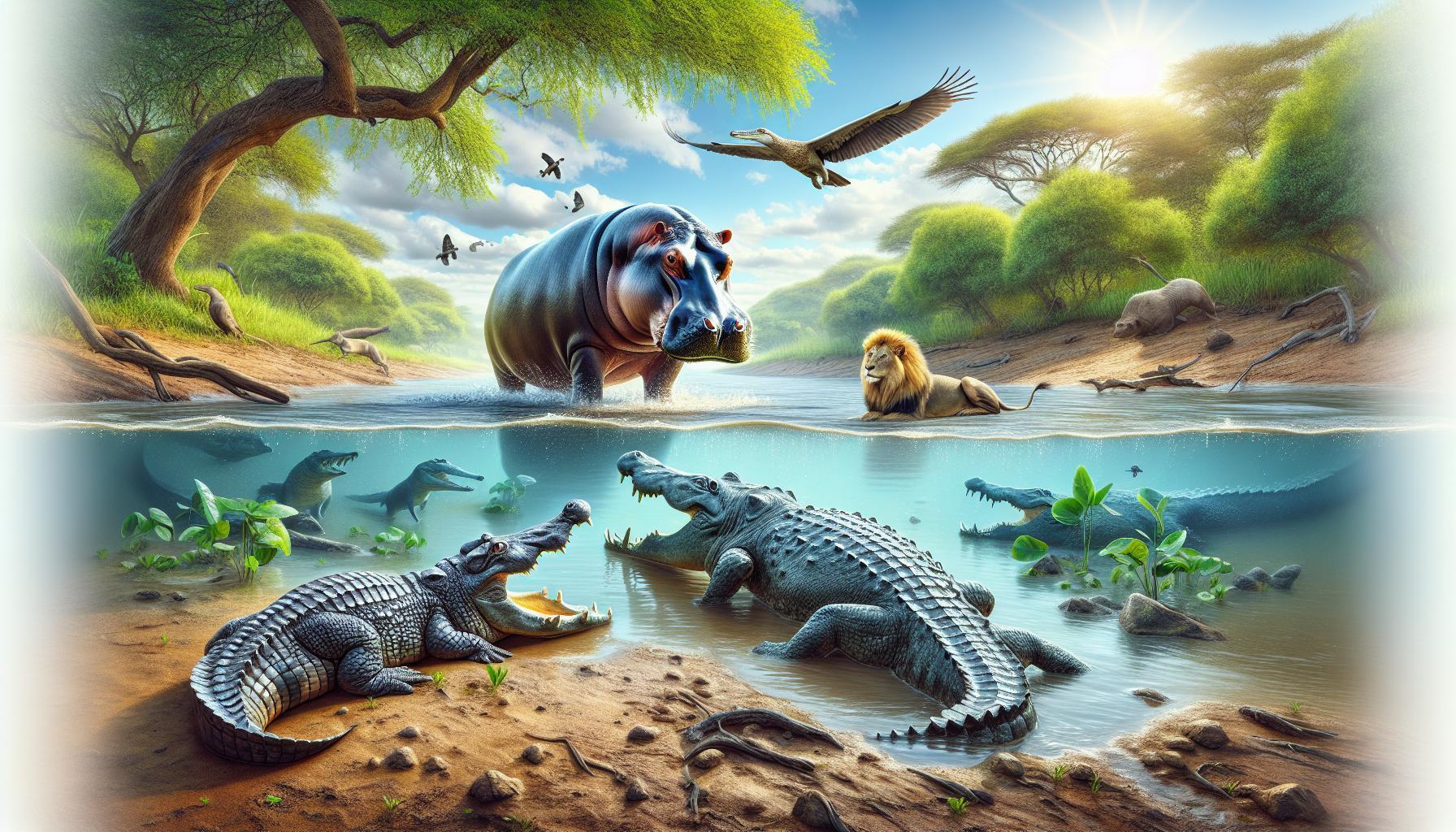
In the fierce world of wildlife, few encounters spark as much intrigue as the showdown between the hippopotamus and the saltwater crocodile. Both are titans of their habitats; the hippo, often seen lounging in rivers and lakes, weighs up to 4,000 pounds, while the crocodile’s formidable size and stealth make it a fearsome predator. Understanding who reigns supreme in this battle for dominance not only sheds light on their fascinating biology but also highlights the delicate balance of their ecosystems.
As you explore this engaging clash between two of nature’s most iconic creatures, you’ll discover the strengths and survival strategies that define both the hippo and the saltwater crocodile. Whether you’re a wildlife enthusiast or simply curious about animal behavior, this comparison will illuminate the unique adaptations and instincts that determine their standings in the wild. Join us as we delve into the depths of their rivalry, uncovering what makes each a formidable force.
Contents
- 1 Understanding the Hippo’s Fearsome Nature
- 2 The Saltwater Crocodile: Apex Predator of the Water
- 3 Comparative Anatomy: Hippo vs. Crocodile
- 4 Habitat and Distribution: Where They Roam
- 5 Diet and Feeding Habits: The Ultimate Showdown
- 6 Behavioral Insights: Social Structures and Territories
- 7 Aggression and Defense: Who is More Fearsome?
- 8 Survival Strategies: Adaptations for the Wild
- 9 Myth vs. Reality: Fact-Checking Common Beliefs
- 10 Conservation Status: Protecting these Majestic Creatures
- 11 What Would Happen in a Face-Off? Hypothetical Scenarios
- 12 Caring for Hippos and Crocodiles in Captivity
- 13 FAQ
- 14 The Conclusion
Understanding the Hippo’s Fearsome Nature
Hippopotamuses, often underestimated due to their seemingly docile appearance, are among the most dangerous animals in Africa. These massive creatures can weigh between 3,000 to 4,000 pounds, making them the second-largest land mammals after elephants. Despite primarily being herbivorous and spending much of their time submerged in water, hippos are responsible for more human fatalities than any other large land animal in Africa. Their mouths can open up to 150 degrees, revealing a set of large, tusk-like teeth capable of inflicting severe damage, and they can run surprisingly fast on land, reaching up to 19 miles per hour.
Interestingly, hippos are social animals that form groups called pods, typically made up of 10 to 20 individuals, which can also include over a hundred in some cases. This tight-knit structure provides security against threats, and although they are often seen lounging in the water together, hippos are known to exhibit territorial behavior, especially males. Any perceived intrusion into their domain-whether from other hippos or even humans-can trigger aggressive responses. Their combination of size, strength, and unpredictability contributes closely to their reputation as fearsome creatures of the wild.
Understanding the true nature of hippos requires acknowledging their ecological role as well. They play a crucial part in their habitats, as their movements create channels in the waterways, helping to maintain healthy ecosystems. As hippos emerge from water to graze at night, they also contribute nutrient-rich dung that feeds the aquatic plants. This dietary and behavioral account not only illustrates their complexity but emphasizes the need for conservation efforts that protect both hippos and their habitats from encroachment and degradation.
In sum, while hippos may appear lethargic and non-threatening, their raw power, coupled with aggressive tendencies when provoked, makes them a significant force in their environment. Stories and encounters often highlight the danger associated with these magnificent mammals, reminding those fortunate enough to appreciate wildlife from a safe distance that respect for their domain is paramount.
The Saltwater Crocodile: Apex Predator of the Water
The saltwater crocodile, an apex predator of immense proportions, stands as one of the most formidable carnivores in the world. Growing up to 23 feet and weighing over a ton, these reptiles dominate coastal regions and rivers in Southeast Asia and northern Australia. They possess a powerful build, enhanced by a mouth filled with 60+ razor-sharp teeth, capable of exerting a bite force exceeding 3,700 pounds per square inch-one of the strongest bites in the animal kingdom. This evolutionary prowess not only allows them to catch prey ranging from fish to large mammals but also establishes their position at the top of the food chain.
Despite their fearsome reputation, saltwater crocodiles are fascinating creatures exhibiting complex behaviors and adaptations. They are highly territorial, often marking their domains with vocalizations and physical displays to ward off intruders. Their hunting strategies showcase a blend of stealth and aggression; they can remain submerged for hours, their eyes and nostrils positioned above the waterline, allowing for excellent camouflage. When prey approaches, they launch explosive attacks, often dragging their catch underwater to drown it-a method as effective as it is terrifying.
Survival in the wild necessitates a deep understanding of the saltwater crocodile’s behavior and habitat. For anyone considering engaging with these magnificent reptiles, whether through conservation efforts or wildlife tourism, it is crucial to respect their environment and adhere to safety measures. Approaching their habitats should always be done cautiously and with guidance, as their aggressive territorial instincts can make any encounter dangerous. Observing their natural behaviors from a safe distance can lead to thrilling and educational experiences that promote both understanding and appreciation of these ancient creatures.
Recognizing the saltwater crocodile as not just a predator but also a vital part of its ecosystem is imperative. They play a crucial role in maintaining the health of their environments by controlling fish populations and promoting biodiversity. This ecological significance emphasizes the importance of conservation efforts, as habitat loss and hunting threaten their populations. Advocating for and supporting wildlife protections can help ensure that these remarkable reptiles continue to thrive in the wild, maintaining their status as both fearsome predators and essential ecological players.
Comparative Anatomy: Hippo vs. Crocodile
The physical differences between hippos and saltwater crocodiles highlight not only their adaptations to life in and around water but also their unique evolutionary paths. Hippos, or hippopotamuses, are colossal mammals characterized by their barrel-shaped bodies, short legs, and large mouths. They can weigh up to 4,000 pounds and grow to be about 10 to 16 feet long. Their skin is thick and hairless, providing them with a natural barrier against sunburn and waterborne parasites-attributes akin to those of marine mammals. In their natural habitat, hippos spend a significant amount of time submerged in water, where they can keep cool. Their eyes and nostrils are positioned high on their heads, allowing them to see and breathe while mostly submerged.
On the other hand, the saltwater crocodile, an apex predator, showcases a differing set of anatomical features that enable it to thrive as a cunning hunter. Ranging from 10 to 23 feet in length and capable of weighing over a ton, these reptiles are equipped with long, powerful jaws lined with over 60 razor-sharp teeth. Their robust bodies are covered in tough, scaly skin that provides protection and camouflage in aquatic environments. Notably, crocodiles possess a unique fourth chamber in their heart, an adaptation that allows them to remain submerged for extended periods by efficiently managing oxygen levels.
When comparing their limbs, hippos have relatively short, sturdy legs suited for their massive bulk and terrestrial mobility, whereas crocodiles have webbed feet that enhance their swimming abilities. Despite their differences, both animals possess formidable weaponry; hippos are known for their powerful jaws, capable of crushing bones, while crocodiles unleash a bite that ranks among the strongest in the animal kingdom.
In understanding these differences, it becomes clear that while both species are well adapted to their respective niches in the water and on land, their evolutionary strategies diverge significantly. Whether you’re observing the ponderous movements of a hippo in a river or the stealthy glide of a crocodile in its domain, the remarkable anatomy of both reveals essential insights into their survival strategies and roles in their ecosystems.
Habitat and Distribution: Where They Roam
The hippopotamus, often called the “river horse,” thrives predominantly in the lush waterways of sub-Saharan Africa. These colossal mammals are typically found in rivers, lakes, and swamps, where they can enjoy the dual advantages of aquatic environments-keeping cool during the day and safely finding food at night. While hippos spend a significant portion of their lives submerged to escape the sun’s harsh rays, they emerge after dusk to graze on grasses, their primary source of nourishment. It is fascinating to note that despite their semi-aquatic lifestyle, hippos are unable to swim; instead, they walk along the riverbed, propelling themselves through water.
In contrast, the saltwater crocodile reigns as the apex predator in coastal and freshwater habitats across the globe. This species has an impressive range, being distributed widely in tropical and subtropical regions. From the brackish waters of mangrove swamps to the open seas, these reptiles can venture inland along river systems, showcasing their adaptability to various environments. Saltwater crocodiles are known to inhabit areas from Southeast Asia to the northern coasts of Australia, often residing near estuaries and river mouths where fresh and saltwater mingle.
When comparing the distribution of these two formidable creatures, their habitats illustrate a remarkable contrast. Hippos favor the vibrant, warm waters of freshwater ecosystems, primarily residing in areas with abundant vegetation near riverbanks, while saltwater crocodiles thrive in diverse aquatic settings, including both freshwater and saltwater ecosystems, showcasing their versatility as hunters.
To summarize, understanding the habitats and distributions of hippos and saltwater crocodiles sheds light on their survival strategies and ecological roles. Knowing where these creatures roam not only enhances our appreciation for their lifestyles but also informs conservation efforts, as their environments face increasing threats from human activities. Preservation of their habitats is essential, not only for the creatures themselves but for the ecosystem balance in which they play critical roles.
Diet and Feeding Habits: The Ultimate Showdown
The diverse diets of hippos and saltwater crocodiles showcase their adaptations to habitat and role within their ecosystems, making for a fascinating comparison. The common hippopotamus primarily thrives on lush, short grasses and can consume between 80 to 150 pounds of vegetation each night. This herbivorous giant emerges after sunset to graze, using its impressive teeth not for combat, but to efficiently clip and grind down tough plant material. Hippos display a unique grazing behavior; their large mouths, equipped with incisors and molars, are perfectly designed for this task, allowing them to cover vast areas of grassland quickly.
In stark contrast, the saltwater crocodile is a formidable predator with a highly varied diet that can include fish, birds, mammals, and even other reptiles. These apex predators utilize stealth and power to ambush their prey, often lurking just beneath the water’s surface. The crocodile’s incredibly strong jaws, with a bite force estimated to be among the highest in the animal kingdom, enable it to capture and hold onto large animals. Their feeding habits can also be opportunistic; if a meal is scarce, they can survive for extended periods without food, relying on stored body fat while remaining at the top of the food chain.
While both animals are formidable in their own right, their diet strategies reveal a deeper ecological balance. Hippos play a crucial role in maintaining the health of their habitat by promoting new grass growth through their grazing, which can encourage biodiversity. Meanwhile, the saltwater crocodile’s predatory behavior helps regulate populations of various species, thus contributing to the overall health of coastal and freshwater ecosystems.
Understanding these dietary habits not only captivates wildlife enthusiasts but also emphasizes the importance of preserving their habitats. Each species plays a vital role in their ecological networks, and recognizing their unique adaptations and feeding mechanisms can help guide conservation efforts aimed at protecting these majestic animals from the threats posed by human activities and environmental changes.
Behavioral Insights: Social Structures and Territories
Hippos, the third-largest land mammals, possess not only physical strength but intricate social behaviors that define their interactions within their territories. Living in groups known as pods, which may consist of ten to thirty individuals, these majestic creatures exhibit a matriarchal social structure. Dominant females lead the pods, overseeing the activities and protections of their family members, which typically include their offspring and a few subordinate males. These social bonds are essential for both protection against predators and the successful raising of young hippos, as offspring remain dependent on their mothers for several years.
The territorial nature of hippos is particularly notable during mating season and dry periods, when water sources become limited. Male hippos establish and defend territories in water bodies, often engaging in confrontational displays against other males, which include vocalizations and physical posturing. They mark their territory not only by vocalizations but also through fecal patrolling, an act of defecation that helps to establish boundaries. This behavior is crucial, as the presence of males can deter others from entering their claimed area, thereby reducing competition for resources.
In contrast, the saltwater crocodile’s social structure is markedly different. These solitary predators are known to be opportunistic hunters. Adult crocodiles tend to be highly territorial, particularly larger males who can dominate expansive waterways. When two males confront one another, it’s often a dramatic show of strength, utilizing both vocal signals and aggressive displays. They may engage in physical battles, but these are not common, as the risk of injury can be detrimental to both. When it comes to nesting, females will fiercely protect their clutches, showcasing their nurturing side despite their fearsome reputation.
Understanding these behavioral dynamics illuminates the intricate balance of power and survival in their respective habitats. Hippos rely on their social structures and communal living to thrive, while saltwater crocodiles depend on solitude and stealth for their predatory lifestyles. Each species has adapted distinct strategies to maintain their territories and social hierarchies, reflecting a fascinating adaptation to their environments that underscores their roles in the ecosystem. As we explore these remarkable adaptations, appreciating their behavioral nuances can enhance our understanding and respect for these powerful animals, providing crucial insights into their conservation and care in both wild and captive environments.
Aggression and Defense: Who is More Fearsome?
When it comes to the battle for dominance in aquatic ecosystems, both the hippo and the saltwater crocodile emerge as formidable candidates. Although they inhabit overlapping territories, their aggression and defense strategies reveal a fascinating dynamic of power and fear. The hippopotamus, despite its hefty appearance, is often regarded as one of the most dangerous animals in Africa. Adult males can weigh up to 8,000 pounds and possess incredibly strong jaws that can crush bones with a single bite. Hippos exhibit aggressive defensive behaviors, particularly when their young are threatened or during territorial disputes. Their territorial nature comes to the forefront during mating season or dry times when water sources dwindle. They rely heavily on physical displays, vocalizations, and fecal markings to assert dominance, avoiding unnecessary conflicts when possible.
In contrast, the saltwater crocodile, the largest living reptile on Earth, employs a combination of stealth and brute strength to establish its reign. These apex predators are solitary by nature and are known for their ambush hunting techniques. A crocodile’s aggression can be especially deadly; it can strike with incredible speed, executing a powerful death roll to subdue prey. They maintain territories primarily through dominance displays, using vocalizations and aggressive posturing, similar to hippos. Notably, male crocodiles will engage in physical confrontations when their territories overlap; however, they generally prefer to avoid risky battles that could lead to injury.
The hippo’s size and strength grant it a unique position; however, its aggression is often more defensive than predatory. It is essential to understand that while hippos may appear more fearsome due to their intimidation tactics and powerful jaws, saltwater crocodiles are built for lethality when hunting their prey. Their tactical approach to aggression, characterized by patience and rapid strikes, sets them apart as highly efficient predators.
In considering which of these magnificent animals is more fearsome, the answer likely depends on context. Hippos dominate in a terrestrial setting with their brute force and social groups, while saltwater crocodiles reign supreme in waters, expertly hunting their prey with minimal effort. In defense, the hippo stands its ground to protect its territory and young, while the crocodile’s strategy is rooted in ambush and stealth. Ultimately, understanding both animals’ behaviors and adaptations provides a richer perspective on their roles within their ecosystems, elevating our respect for these remarkable creatures.
Survival Strategies: Adaptations for the Wild
Survival in the wild demands not only strength but also a suite of adaptations that allow species to thrive in their respective environments. The hippopotamus and the saltwater crocodile, both formidable in their own right, showcase unique survival strategies that complement their dominant roles in their ecosystems.
The hippopotamus is masterfully adapted to its semi-aquatic lifestyle. One of its key features is its robust body, which is streamlined for swimming, allowing it to navigate rivers and lakes with surprising agility despite its bulk. Hippos can hold their breath for up to five minutes while submerged, enabling them to evade threats while resting underwater. Their skin, though thick and tough, is also sensitive; it secretes a natural sunscreen that helps protect against sunburn, while also acting as a moisturizer, crucial for their survival in the hot African climate. The hippo’s herbivorous diet is supported by its highly efficient digestive system, capable of breaking down tough grasses important for their nutrient intake.
In contrast, the saltwater crocodile is the epitome of a predator’s design, equipped with formidable adaptations that prioritize stealth and efficiency. Its elongated body, powerful tail, and strong limbs allow for rapid movement in water and impressive bursts of speed on land. Camouflage plays a pivotal role in a crocodile’s hunting strategy; its olive-brown skin blends seamlessly with the murky waters of its habitat, making it nearly invisible to unsuspecting prey. Moreover, crocodiles possess extremely powerful jaws filled with sharp teeth that can exert a crushing force of over 2,000 pounds per square inch, perfect for subduing a variety of animals, from fish to large mammals. Their ability to remain motionless for long periods while waiting for the right moment to strike enhances their effectiveness as ambush hunters.
Both the hippo and the saltwater crocodile exhibit fascinating social behaviors that contribute to their survival. Hippos are social creatures, often found in groups, also known as pods, which provide safety in numbers against predators and help to maintain social hierarchies among males. Their vocalizations and body language facilitate communication and coordination, particularly during mating seasons. Saltwater crocodiles, on the other hand, are more solitary, establishing and defending vast territories that ensure access to resources. Their territorial displays and aggressive vocalizations communicate their dominance and deter potential rivals, reducing the likelihood of conflict.
Ultimately, both species demonstrate that success in the wild encompasses a complex interplay of physical adaptations, social structure, and behavior. These strategies not only ensure survival but also establish their roles as apex competitors within their respective environments, highlighting the intricate balance of nature.
Myth vs. Reality: Fact-Checking Common Beliefs
The battle of perception between the hippopotamus and the saltwater crocodile is rife with misconceptions, often painted with strokes of myth rather than reality. Many believe that hippos are simply docile creatures, basking lazily in the water, while crocodiles are considered cold, calculating predators lurking opportunistically for their next meal. However, this simplified view does a disservice to the complexity of both species and their behaviors.
One common myth is that hippos are inherently more dangerous simply because of their size. While it’s true that hippos can be aggressive and territorial, often credited with more human fatalities than any other large animal in Africa, this aggression is primarily rooted in their need to protect their young and maintain territory. In reality, hippos are herbivores and spend most of their day submerged in water to stay cool, only emerging at night to graze on grass. Their surprisingly quick movement in water and on land often catches people off guard, as they can run nearly 19 miles per hour despite their bulk.
Conversely, the saltwater crocodile is frequently portrayed solely as the ultimate apex predator. While it’s undoubtedly one of the most formidable hunters in aquatic environments, its reputation for stealth often overshadows its vulnerable moments. For instance, they can be surprisingly social during breeding seasons, showing behaviors that go against their solitary image. Saltwater crocodiles are also opportunistic feeders, capitalizing on what comes their way rather than being the relentless hunters they are often described as.
In exploring the dynamics of these two incredible animals, it also becomes evident that both play significant ecological roles. Hippos, through their grazing habits, help shape the vegetation along riverbanks, which in turn supports a multitude of other species. Crocodiles maintain fish populations and also act as scavengers, ensuring a balance in their environments. Understanding these nuances not only brings to light the complexities of each species’ behavior but also underscores the importance of conserving both for the intricate ecosystems they inhabit. By shattering these myths, we can appreciate the formidable realities and coexistence of the hippo and crocodile in their natural habitats.
- Myth: Hippos are gentle giants with no real threat.
- Reality: Hippos can be extremely aggressive when protecting their territory and young.
- Myth: Crocodiles are always solitary hunters.
- Reality: They can exhibit social behaviors, especially during mating seasons.
Conservation Status: Protecting these Majestic Creatures
The hippopotamus and the saltwater crocodile inhabit some of the most dynamic ecosystems on Earth, yet both species face significant threats that jeopardize their survival. Current conservation status reports indicate that hippos are listed as “vulnerable” by the International Union for Conservation of Nature (IUCN), while saltwater crocodiles, despite being categorized as “least concern,” encounter specific local pressures. Understanding these animals not only requires an appreciation for their ecological roles but also an awareness of the challenges they face.
Hippos are increasingly threatened by habitat loss due to agricultural expansion, poaching for their meat and ivory-like teeth, and conflicts with humans who encroach on their territories. Protecting vital river ecosystems is crucial, as these waters serve not only as the hippos’ home but also as the lifeblood supporting diverse freshwater species. Initiatives aimed at habitat preservation and anti-poaching efforts are vital in safeguarding these incredible creatures. Communities can become allies in conservation by promoting ecotourism, which can provide economic incentives to protect hippos rather than exploit them.
Conversely, while saltwater crocodiles are less threatened on a global scale, localized populations can face dire situations due to hunting, habitat degradation, and climate change. Their survival hinges on maintaining healthy wetlands that provide breeding grounds and supporting complex food webs. Education and awareness programs can help local communities understand the ecological importance of crocodiles, encouraging attitudes that promote their conservation.
To effectively protect hippos and crocodiles, robust conservation policies must be employed, focusing on habitat restoration, anti-poaching laws, and community-based management approaches. By involving local populations in conservation plans, we can create a sustainable coexistence model that respects both the majesty of these animals and the needs of the humans living alongside them. As we work to ensure the future of hippos and saltwater crocodiles, it is crucial to recognize that the health of ecosystems relies on their presence.
- Engagement: Community involvement in conservation initiatives can lead to more effective protections for these animals.
- Education: Spreading awareness about the importance of both species can foster better coexistence between humans and wildlife.
- Sustainable Practices: Supporting sustainable tourism can provide economic benefits while protecting natural habitats.
What Would Happen in a Face-Off? Hypothetical Scenarios
The intriguing question of what might happen in a face-off between a hippopotamus and a saltwater crocodile captivates animal enthusiasts and wildlife researchers alike. These two formidable creatures, both apex predators within their domains, possess distinct adaptations that enable them to thrive in their respective environments. The hippopotamus, with its immense size and powerful jaws, can weigh over 3,000 kilograms, making it one of the largest land mammals. In contrast, the saltwater crocodile, the largest reptile on Earth, can exceed lengths of 7 meters and has the strongest bite force of any animal, capable of crushing bones with ease.
If a confrontation were to occur, the terrain would play a critical role in determining the outcome. In shallow waters, the hippo’s bulk and agility could give it an upper hand, allowing it to maneuver effectively and use its powerful mouth to fend off the faster but smaller crocodile. Conversely, in deeper waters where the crocodile operates best, its stealth and ambush tactics could prove devastating. Saltwater crocodiles are known for their ability to launch surprise attacks, often catching their prey unaware, and they can deliver a lethal bite within seconds.
Understanding the behavioral patterns of both species can also shed light on potential interactions. Hippos are highly territorial, especially in water, and will aggressively defend their space against intruders, including crocodiles. In contrast, crocodiles typically avoid direct conflict with larger animals unless they are hungry and confident of a successful ambush. In many cases, the hippo would likely opt for intimidation, using its weight and aggressive displays to discourage a confrontation, while the crocodile may choose to retreat, recognizing the risk of injury.
The ecological roles of both animals further complicate this hypothetical encounter. Hippos play a crucial role in maintaining the health of their aquatic environments, and their destruction of vegetation supports the growth of new plants, which benefits diverse aquatic species. Saltwater crocodiles maintain the balance of ecosystems by controlling fish populations and scavenging, which helps prevent the spread of disease. Thus, while a face-off between these titans could promise a thrilling spectacle, it is ultimately their unique adaptations and behaviors that allow them to coexist in the complex tapestry of life in sub-Saharan Africa’s waterways.
In summary, while the question of who would reign supreme in an encounter between a hippo and a crocodile is intriguing, the realities of their behaviors, habitats, and ecological importance highlight a breathtaking natural ballet rather than a definitive battle for supremacy. Understanding these animals deepens our appreciation for the delicate balance of their ecosystems and emphasizes the need for conservation efforts to protect both species.
Caring for Hippos and Crocodiles in Captivity
Caring for hippos and saltwater crocodiles in captivity requires comprehensive knowledge of their unique biological needs and behaviors. Both species are incredible yet complex creatures, and understanding their linguistic nuances is essential to ensure their health and well-being in a controlled environment.
For hippos, which can weigh over 3,000 kilograms and measure up to 4 meters long, a significant focus should be on providing large, water-filled enclosures. Hippos are semi-aquatic, needing deep water to submerge and maintain skin hydration, as their skin can crack in dry conditions. These enclosures should ideally include sandy or muddy substrates where hippos can wallow-a natural behavior that helps regulate their body temperature and provides skin protection. A diet high in fiber is crucial, as wild hippos primarily feed on grasses. Supplementing their diet with hay, non-toxic leafy greens, and specially formulated pellets can meet their nutritional needs.
In contrast, saltwater crocodiles command respect and care that mirrors their apex predator status. As the largest reptiles on Earth, they require large aquatic habitats that allow for diving and basking. These enclosures should include both deep pools and broad basking areas, maintaining water quality to prevent infections and other health issues common in reptiles. Feeding saltwater crocodiles hinges on understanding their carnivorous diet, primarily consisting of fish and small mammals. Regularly providing whole prey or chunks of meat ensures they receive adequate nutrition, while some individuals may also benefit from calcium supplements to support bone health.
To successfully care for both species, it is imperative to observe their social and solitary behaviors. Hippos are often social animals that thrive in groups, while crocodiles may exhibit more solitary tendencies outside of mating seasons. Therefore, each species may require tailored enclosure designs-hippos may prefer the company of companions, while crocodiles need space to establish territories.
Providing enrichment is also essential; both species benefit from activities that stimulate their physical and mental well-being. For hippos, this might include items that encourage foraging, while crocodiles may enjoy items that promote hunting-like behaviors. Ultimately, understanding the intricate needs of hippos and saltwater crocodiles in captivity facilitates their well-being, making the responsibility of keeping such magnificent creatures in a controlled environment both rewarding and complex.
FAQ
Q: Who would win in a fight between a hippo and a saltwater crocodile?
A: While outcomes can vary, generally, hippos are considered stronger due to their massive size and aggressive nature. They can weigh over 3,000 kg, whereas saltwater crocodiles typically weigh up to 1,000 kg. However, crocodiles have a powerful bite and aquatic advantage, complicating the scenario.
Q: What adaptations do hippos and crocodiles have for survival?
A: Hippos have thick skin for protection and can hold their breath underwater for up to five minutes. Saltwater crocodiles possess a powerful tail for swimming and camouflage skin, allowing them to ambush prey effectively in their aquatic environments.
Q: What is the primary diet of hippos compared to saltwater crocodiles?
A: Hippos are herbivores, primarily grazing on grasses, consuming around 40 kg nightly. In contrast, saltwater crocodiles are carnivorous, preying on fish, birds, and mammals, utilizing their strong jaws to catch and hold onto their meals.
Q: How do hippos and crocodiles establish territorial claims?
A: Hippos are territorial in water and will aggressively defend their space from other hippos and intruders, often engaging in confrontations. Saltwater crocodiles also exhibit territorial behavior, particularly during mating season, with males defending large areas against rivals.
Q: What are common misconceptions about hippos and crocodiles?
A: A common misconception is that hippos are harmless; in reality, they are among the most dangerous animals in Africa. Similarly, people sometimes underestimate crocodiles’ speed on land, though they can surprisingly sprint short distances quickly.
Q: How do hippos and crocodiles interact in the wild?
A: Hippos and crocodiles often inhabit the same regions, especially rivers and lakes. While they generally avoid each other, conflicts can arise, particularly when a crocodile encroaches on a hippo’s space.
Q: Where do hippos and crocodiles prefer to live?
A: Hippos are typically found in sub-Saharan Africa in rivers and lakes with abundant vegetation. Saltwater crocodiles inhabit coastal areas and rivers in various regions, including Asia, Africa, and Australia, thriving in brackish waters.
Q: What role do hippos and crocodiles play in their ecosystems?
A: Hippos contribute to nutrient cycling by excreting large amounts of manure into waters, supporting aquatic life. Saltwater crocodiles help maintain fish populations and are vital top predators, keeping the balance in their ecosystems.
The Conclusion
As we unravel the fierce competition between hippos and saltwater crocodiles, remember that both species exhibit remarkable adaptations to their environments. Whether you’re fascinated by their colossal size or their unique behaviors, understanding who reigns supreme boils down to their ecological roles and survival strategies. Don’t leave your curiosity hanging-dive deeper into our related articles on animal adaptation and habitat preservation to expand your knowledge further.
Ready to learn more? Sign up for our newsletter to receive the latest insights on wildlife science and practical pet care tips right in your inbox. If you’re considering caring for exotic pets, also check out our comprehensive guides to ensure you make informed decisions. Join the conversation by sharing your thoughts in the comments below-let us know which animal you think deserves the title of champion! Your engagement helps us bring you more exciting wildlife content.